Tuesday, May 23, 2023

Custom-Made Education


The ad verecundiam fallacy comes up when we claim something is true solely on the grounds that someone who is not an authority says it is true.  This fallacy underlies much celebrity-based advertisement and it is why I am not inclined to accept uncritically the ideas of Elon Musk, Bill Gates, or even those who sit on boards and committees of education.  Yet a good friend sent me this video of Musk's thoughts on education, and after watching it I couldn't stop pondering what he had to say.


Hand-Crafted


Musk's approach to education is not to front load terminology and the foundational facts of a subject, but rather to set up situations in which students can explore and discover the things to be learned.  There is nothing new in this, and we have a term for it:  inductive learning.  Using an automotive example, he argues for introducing students to an engine and then, when they have to take it apart and are searching for the best way to do it, introducing them to the concept of the wrench.

There is much appeal to this approach, and we all use it at one time or another.  There was a time when I didn't know the difference between a Roman Ogee and a Roman O.G.


As I did more wood working in my garage, I eventually learned the name for the router bit that makes such an elegant curve along with all sorts of skills involving table saws, scroll saws, and more.  I learned what I needed when I needed it.  I moved at my own pace and gained much from trial and error, and this is precisely why Musk advocates for this style of learning.

There are, however, key requirements for this to be a successful method of education, including both the interest and the disposition to learn, but the two I want to focus on here are time and size.  "Had we but world enough and time," wrote Andrew Marvell in "To His Coy Mistress," there would be no rush in romantic affairs and, I would add, in educational ones as well.  As I have developed my woodworking skills over the years, I have labored under no time pressure, and this has given me the space to make mistakes and to learn from them.  As for setting an engine in front of a group of students and allowing them to discover the need for something like a wrench, a low student-to-teacher ratio is not merely important, it is essential.

Mass-Produced


In the fall of 2021, there were approximately 49.5 million preK-12 students enrolled in public schools, which of course says nothing about the number of students in private, hybrid, and homeschool models.  Although these tens of millions of students are not evenly distributed across the country, thus creating some schools with very large enrollments and some with very small, the need is simply too great for each and every one of these students to participate in an inductive, discovery-based model of learning in all areas.  Let us be clear.  This does not mean that such a method cannot work at all in larger schools.  It may be well suited to certain subjects or certain units within certain subjects, but the time and low student-to-teacher ratio necessary for the success of this model cannot be obtained in the schooling of nearly 50 million children across twelve or more years in reading, writing fiction, writing nonfiction, earth science, biology, anatomy, chemistry, physics, algebra, geometry, calculus, Latin, Spanish, French, German, Hebrew, Chinese, Japanese, choir, band, orchestra, 2-D art, 3-D art, coding, and the nearly endless list of curricular offerings.

When I say that time constraints and human ratios are of necessary importance for this model, I mean that unless they are gotten right, the model will not work.  Let's start with time.  We continue to find ways for time not to be an obstacle to learning, but in a large school setting, we simply cannot serve the time needs of each and every student.  Student A may need more time to grasp a concept, but Student A cannot remain in the classroom of Teacher X to do so if Student A is required to be present in another class and if Teacher X must likewise teach another group of students.  However much we are able to accommodate the time needs of Student A, and perhaps even Students B through G, we will come to a point where practicality sets in and we will not be able to meet the need for Student H.

This challenge is a function of the other necessary factor at work here, student-teacher-ratios.  Most schools are limited in the number of teachers they can employ.  To reach a workable student-teacher-ratio for the model Musk describes, a ratio that will differ depending on the subject and needs of the students, far more money would be required than even the most ardent supporter of school funding considers, for not only would more teachers need to be hired, but there would have to be significant increase in building space in which teaching and learning would be done.  To educate 50 million children across fifty states from more than twelve years, practical forces, unlikeable though some may be, shape what we can and cannot do, and those forces have brought about the form of education that most people think of when they consider education at all, a form that can seem more like an assembly line of mass-produced parts than a hand-crafted work of art.


Salad Bowls and Melting Pots


My wife, an educator with more than thirty years of experience in the classroom and in administration within a variety of public, private, and hybrid models, is fond of saying that things are "both-and" and not "either-or."  As I referenced earlier, there are traditional, public school models of education in our country alongside private, hybrid, and homeschool models.  Some are better for some students, others work better for others, and there is no reason they cannot all sit side by side.  The entrepreneurial spirit that has been so much a part of the United States since its inception must surely celebrate this.  At the same time, even when practical factors within a large school setting limit some of what can be done, they do not limit all, and it is not only possible but in fact takes place every day in classrooms led by the best teachers that students learn from blended experiences that make excellent use of deductive and inductive education.

Tuesday, May 16, 2023

Seeing Through a Glass Darkly: The Whys and Hows of Translation

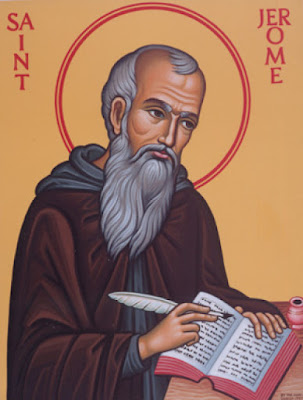
St. Jerome Translating the Bible


They say that people who live in glass houses shouldn't throw stones, and since I am working on my own translation of Vergil's Aeneid, it may be ill advised for me to offer the scathing critique I am about to put forth here.  On the other hand, sometimes a child needs to shout, "The emperor isn't wearing any clothes!"

The Whys of Translation


Why do we translate words from one language into another?  The most obvious reason is to make ideas in one language accessible to those who cannot understand that language.  There are innumerable ideas in poetry, philosophy, theology, history, science, mathematics, law, and all types of literature that people want to share and explore, and it is not possible or reasonable for everyone who is interested in those ideas to become conversant in the languages in which they were originally written.  A person may master several languages, but even the most multilingual among us will be not be literate in all of them.


Another reason to translate is because translation itself is enjoyable and can be a work of art per se.  The King James translation of the Bible is widely acknowledged as one of the most elegant works in English, and even though Richard Bentley did not think Alexander Pope's translation of Homer's Iliad was up to the mark, he conceded that it was "a pretty poem."  My own efforts to translate the Aeneid are akin to climbing K2.  There certainly is no need of another English Aeneid, for we have a full one hundred since the first in 1513.  I simply want to do it.  I have no delusion that mine could sit on the same high shelf as that of Dryden or Fitzgerald, but I have more fun translating than working the New York Times crossword, and the Aeneid is a really good story.   

The Hows of Translation


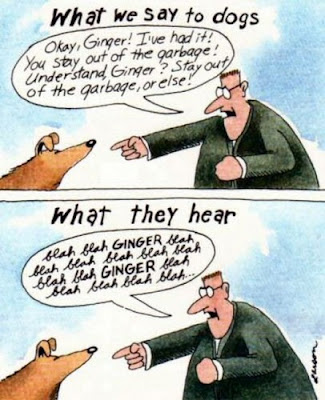
How does one go about translating a work from one language into another?  A blog post is not the place to work through the ins and outs of translation theories, and they can drive a person close to insanity.  Do I translate word for word?  Even then, what does that mean?  If a word means a canine animal, should I write "dog" or should I choose "puppy?"  Must I keep the words in the same order as the original?  There may be a particular sense expressed in that order, but when it is retained in English the result may sound like something from Yoda.  

This takes us back to the first reason for translation.  One method, or at least its results, may become outdated.  For all its beauty, the King James translation of the Bible can be downright unintelligible to some today.  It was published in 1611, and more than a few things have changed about English between then and the 21st century, hence the offering of sixty-two English versions on Biblegateway.com.

And this leads us to the translation that I want to discuss here.


One That Cruncketh in Howling


A good friend recently emailed me a blurb about Scot McKnight's forthcoming translation of the New Testament.  After a brief glance at the preview, I replied that it might be the most godawful thing I had ever seen.  It reminded me almost immediately of one of the most mocked and reviled works in all of English translation, the 1582 attempt at the Aeneid by Richard Stanyhurst.  Filled with grotesqueries like "her burial roundel dooth ruck, and cruncketh in howling," his efforts to produce English quantitative poetry like that of the Romans forced him into infelicities of expression and the use and spelling of words not current in his time.  One of his phrases, however, could be used to describe what we have with McKnight's work, "darcklye bemuffled."

McKnight says of his guiding principle in translation, "The basic theory at work in this translation can be summed up in these words: literal, chunky, sounds-more-like-Greek than standard translations (nothing against them), transliteration of names and places (like The First Testament), and somewhat disruptive for those who are familiar with their Bibles."  Let's take a look at what this means.

Matthew 1:18


The genesis of Yēsous Christos was this: His mother, Maria, being engaged to Yōsēf, before they had assembled . . . she was found having a child in her womb of the Holy Spirit. 

McKnight has transliterated the names from Greek into English letters, just as he said, and he held more closely to the Greek word order and syntax than most English versions, but to what end?  The verb he translates as "assembled" is συνελθεῖν, which means any of the following:  come together, assemble, meet, have dealings with, be united.  Regardless of the theology you hold on the relationship between Mary and Joseph, "assembled" is simply ridiculous here.  Why not say "came together?"  "Assembled" has too many connotations in 2023 that just don't work in this instance.  We use the word to describe putting together a child's toy on Christmas Eve or the coming together of a group of people.  We do not use it to describe any action performed by only two.

Matthew 2:8


Whenever you find, declare to me so I also, going, may bow down to him.

The odd syntax here is quite common in Greek and Latin.  The present participle "going" that modifies the pronoun "I" is usually rendered into some sort of clause in English, like "so I also may go and bow down."  Keeping the Greek syntax in English reminds me of the famous story, often attributed to Churchill, about the man who was challenged on the correctness of his speech when he said, "That is something I won't put up with."  The rule was often taught not to end a sentence with a preposition, so the man showed the absurdity of that by replying, "That is something up with which I will not put."  Does McKnight's rendering follow accepted rules of English grammar?  It does, but at the cost of wrenched and jarring syntax.

You may have thought I misquoted his line, for the expression "whenever you find" seems to want a direct object.  Both Latin and Greek are okay with this, but English is not.  The King James committee that published the Authorized Version in 1611 was so scrupulous as to put in italics words not in the original languages but that were necessary for English sense.  Those translators rendered this as "and when ye have found him."  I cannot see such torturing of English to imitate Greek as yielding anything other than frustration on the part of the reader.

Matthew 3:1, 13-14


In those days Yōannēs the Dipper [John the Baptist] arrives announcing in the wilderness of Youdaias....  Then Yēsous arrives at the Yordanēs from the Galilaia [Galilee] to Yōannēs to be dipped by him.  But Yōannēs was preventing him, saying, “I have a need to be dipped by you, and come to me?”

The use of the present tense "arrives" in these verses is accurate and could even be justified in its retention if the effort is to make the narrative vivid.  The historical present does just that.  But referring to John the Baptist as Yōannēs the Dipper is beyond absurd.  Actually, it may only be absurd.  Making John say, "I have a need to be dipped by you" is beyond absurd.

The root verb of "dipper" and "dipped" in this translation is βαπτίζειν, a word meaning such things as "to plunge," "to be drowned," "to dip," and "to dye."  Whichever definition you choose, you will be setting up a theological debate about baptism by sprinkling or immersion, but that is not the problem here.  "Yōannēs the Dipper" simply sounds ridiculous, and while that may not sound like much of an objection, it is.  When we use the word "Dipper" in its capitalized form in English, it invariably calls to mind the constellation called The Big Dipper.  The phrase "John the Dipper" cannot help but summon images of Jack the Ripper, a rhyming phrase of the same number of syllables and the same rhythm.  However accurate the word "dip" may be in this context, it carries too much other freight to be effective here.  As for "I have a need to be dipped by you, and come to me," I can only assume this is a typo, since the Greek verb for "come" is not only second person singular, "you" in English, but even includes the second person pronoun σὺ, as if to emphasize "you."

You can read most of McKnight's translation of Matthew here, but you get the idea.  So, why am I displeased with this work?  It has to do with the reason McKnight had for translating.  He says on his website, "Yes, I use some nonstandard translations of terms with which we are so familiar we don’t even see the words! Our prayer is this translation will slow readers down to hear the NT afresh."  This is a laudable goal, one more worthy than my own of mere personal pleasure in the act of translation.  Unfortunately, this translation misses the mark.  The effort to be "literal," "chunky," and "more-like-Greek" has resulted in English that at times is merely awkward and at others nearly unreadable.  If the goal is to slow readers down with a Greek-like translation so they can consider afresh passages that have grown dull through familiarity, there is a better way to go.  Interested readers can learn Greek.  The Greek-like version of McKnight is more akin to the odd and stilted translationese of the secondary or undergraduate language classroom.

One blurb on McKnight's website reads, "Scot McKnight's translation of the New Testament takes us into the very world of Jesus and the apostles; it breathes the air of antiquity. Rather than try to make the New Testament too familiar, McKnight makes it sound foreign, like a distant land you are hearing about for the first time. The Second Testament is a monumental literary achievement that will enrich and excite readers for generations."  Why?  Why would we want an ancient work in modern language that sounds ancient?  First of all, the perceived oddness in the target language is not at all what first century audiences would have taken from the New Testament writings.  Read a passage from McKnight's translation of Matthew and you will experience jarring strangeness.  A first-century, Greek-literate person reading that same work in the Greek that Matthew wrote would have experienced ease and familiarity, at least with the style of writing.  The content, on the other hand, is jarring in the extreme, but that comes from the power of what Jesus had to say.  The message is already challenging.  What benefit is there to reading it in the "air of antiquity," especially when the message bore no such antiquity in the period when it was written?

What made Richard Stanyhurst's 16th century English translation of the Aeneid so execrable was that he was attempting to write in English quantitative meter.  Simply put, the quantitative meter of Homer's Greek and Vergil's Latin is based on long and short syllables, a system that does not exist in English, the poetry of which is often based on accent.  By forcing the English language into the syntax of ancient Greek, McKnight has unfortunately proven what Jesus described with another metaphor.  "Neither is new wine put into old wineskins.  If it is, the skins burst and the wine is spilled and the skins are destroyed.  But new wine is put into fresh wineskins, and so both are preserved,"  (Matthew 9:17, ESV).

If the goal had been to play with the form of languages and experiment as a jazz musician might do, then we could look upon this with a degree of interest.  Since the stated purpose, however, was to draw people into a fresh encounter with the word of God, this version must be seen as one that only darkens the glass through which we are hoping to see.

Thursday, April 27, 2023

The High Calling To Serve The Least

A daycare worker in Fishers, Indiana, a growing suburb north of Indianapolis, has been charged with nineteen felony battery accounts.  Documentation shows evidence of shoving a child's head into a change table, slamming her down, and covering her face with a blanket.  Video evidence shows children being dragged, thrown to the ground, and pushed.  Further video shows a boy being struck in the back of his head and kicked in the back before being lifted from the ground by one arm.  Another girl was dropped onto a tile floor.

In Brownsburg, Indiana, a town of approximately thirty thousand just west of Indianapolis, a teacher and aide have been charged with felony offenses against a special education elementary student.  Three other staff members have been charged with misdemeanors for failure to report the incident.  A child of seven was told that if he vomited, he would have to eat his own vomit.  A tray was placed in front of the child, and when the child vomited, he was given a spoon with which to eat the vomit, which he did, as the adults watched.


The High Calling to Serve the Least


Truly, I say to you, as you did it to one of the least of these my brothers, you did it to me.  (Matthew 25:40, ESV)

In the early days after the resurrection of Jesus, His disciples found that the demands on their time both to preach the good news and serve the needy had to be divided among them, and in Acts 6:2-3, we read of their decision.  

"And the twelve summoned the full number of the disciples and said, 'It is not right that we should give up preaching the word of God to serve tables. Therefore, brothers, pick out from among you seven men of good repute, full of the Spirit and of wisdom, whom we will appoint to this duty.'"

The verb for "to serve" is at the root of the word "deacon," about whose qualifications we read the following in 1 Timothy 3:8-10.

"Deacons likewise must be dignified, not double-tongued, not addicted to much wine, not greedy for dishonest gain. They must hold the mystery of the faith with a clear conscience. And let them also be tested first; then let them serve as deacons if they prove themselves blameless."

Working with children, working with the elderly, working with those with special needs...serving in a school or hospital, a rehab facility or a nursing home...these are among the highest callings.  Too often we honor only those with keen intellect or great physical prowess, or those who have earned a degree in certain disciplines.  We honor them with large salaries, benefits, and perks of the job.  All the while, we are content for anyone with a pulse to serve a role that can only truly be filled by the best among us.

Lord, have mercy.  Christ, have mercy.  Lord, have mercy.

And may He have mercy on us all.


Tuesday, March 21, 2023

Pomodoro, Jesus, and Rocky


How on earth could a timer that looks like a tomato, Jesus Christ, and the fictional southpaw boxer from Philadelphia named Rocky Balboa find their way into the same blog post?  A recent professional development session at my school had me pondering this very thing.


The Pomodoro Technique


The Pomodoro Technique is a strategy for time management that has been around since the 1980s.  The basic idea is that you set a timer, which may or may not be in the shape of a pomodoro (Italian for "tomato"), work on your task for that amount of time, take a break, and then set the timer again for your next task.


This is a great strategy and one that the learning coach at our school, Jeff Buckner, presented to us during one of our faculty Teaching & Learning sessions.  Many of our students struggle with time management, and this is an easy strategy for them to implement.  Of course, this isn't just for students, and as I began thinking about how this could play out in my own life, my thoughts turned to Jesus and Rocky Balboa.


Our Favorite Characters


Ezra Pound recalled the following anecdote, apparently a favorite of William Butler Yeats.

"A plain sailor man took a notion to study Latin, and his teacher tried him with Virgil; after many leassons he asked him something about the hero.

"Said the sailor:  'What hero?'

"Said the teacher:  'What hero, why, Aeneas, the hero.'

"Said the sailor:  'Ach, a hero, him a hero?  Bigob, I t'ought he was a priest.'"  (Homer:  A Collection of Critical Essays, ed. George Steiner and Robert Fagles, 1962, pp. 17-18)

This anecdote well expresses the reaction many people have had to the characters of Achilles in the Iliad and Aeneas in the Aeneid.  If you prefer your heroes to be sword-wielding, spear-throwing warriors, the kind that yell out that their commander is a "bloated drunk with a dog's eyes and a rabbit's heart" and fight a river...yes, a river...then Achilles is your guy.  If, on the other hand, you want your hero to be the kind of person who suppresses his own feelings of pain as he inspires his troops and will do whatever it takes to fulfill his duty to gods, country, and family, then you want Aeneas.

For years, I was an Achilles kind of guy, and for that reason I did not enjoy all that much teaching Vergil's Aeneid.  At some point that changed, but I still gravitate to characters that leave it all out on the field, even if doing so does not lead to victory.  In addition to Achilles, I absolute love Diomedes in Book 5 of the Iliad.

Thus toiled the chiefs, in different parts engaged,
In every quarter fierce Tydides raged,
Amid the Greek, amid the Trojan train,
Rapt through the ranks, he thunders o'er the plain;
Now here, now there, he darts from place to place,
Pours on the rear, or lightens in their face.
Thus from high hills the torrents swift and strong
Deluge whole fields, and sweep the trees along;
Through ruined moles the rushing wave resounds,
O'erwhelms the bridge, and bursts the lofty bounds;
The yellow harvests of the ripened year,
And flatted vineyards, one sad waste appear,
While Jove descends in sluicy sheets of rain,
And all the labours of mankind are vain.
⁠So raged Tydides, boundless in his ire,
Drove armies back, and made all Troy retire.  (Iliad 5.110-125, Alexander Pope translation)

I love Rocky Balboa, giving it all, even when he loses to Apollo Creed in the first movie, and my favorite opponent of his is probably Clubber Lang, whose grit and determination, even though he loses, are simply brutal.  Yet I sometimes wonder.  Are these the models that should inspire me the most?


Front-running


Prefontaine and Bowerman


In the 1998 film Without Limits, University of Oregon track coach Bill Bowerman (Donald Sutherland) is having a planning session with long-distance phenom Steve Prefontaine (Billy Crudup), who does not agree with his coach's philosophy of running.  After stating flatly that running any other way than all out and leading for the entire race is little more than the excrement of chickens, Pre explains.

Pre:  What else do you call laying back for two and a half miles then stealing a race in the last two hundred yards?
Bowerman:  Winning!

There is a great part of me that thinks as Steve Prefontaine did.  I am a highly driven person, and like Achilles or Diomedes or Rocky or Pre, I want to hit hard and give it my all.  And then there's Jesus.


Pomodoro Paul?


Jesus took time away from the demands of ministry to pray.  He got up early and separated Himself from the hustle and bustle of life to spend time with His Father.  He was never in a hurry and even stopped to address the needs of an unknown woman who had suffered from bleeding for twelve years while on His way to heal the son of the synagogue leader.  He famously taught His friend Martha not to be stressed out over things of lesser importance and to focus on what truly mattered.  And despite His seemingly slow and deliberate pace, He accomplished all He was sent to do.

What, then, is my takeaway from the Teaching and Learning session at our school?  I know myself well enough to acknowledge that I am wired for action.  I will probably still declare those lines about Diomedes translated by Pope when I am in my golden years and with as much thrill and excitement as I read them today.  Yet I want to reach that time and fulfill all that God has called me to do, and therefore it's not so much the action-adventure heroes that are my models for how to live, however much I may enjoy reading and watching their exploits, but Paul.  Paul was a hard-driven sort of person, shown first in his zeal for his faith searching out Christians to have them punished.  Yet once his life was transformed by his encounter with Jesus on the road to Damascus, he approached life a bit differently.  Still passionate, although for a different mission, he would say go on to say, "I press on toward the goal for the prize of the upward call of God in Christ Jesus."  (Philippians 3:14, ESV)

Passion and drive are good, but they must be balanced with rest and restoration.  Fulfilling the call of God is more important than the thrill of any high adventure moment along the way.  I imagine that if tomato-shaped timers had existed in his day, Paul might have found value in the Pomodoro Technique.


Thursday, March 2, 2023

Teacher of A Thousand Faces


Bernard Barcio on the catapult field

Legendary actor Lon Chaney may have been known as the Man of a Thousand Faces for his ability to transform himself with makeup in the early days of cinema, but the teacher who deserves that appellation should surely be Bernard Barcio.  His former students who knew him as Magister Barcio are legion, yet nearly equalling that number are the colleagues who called him Bernie and whose professional and personal lives were better for knowing him.  Then there were the audiences who knew him as Fabius the Tribune from the Roman army or Marcus Loreius Tiburtinus, citizen of Pompeii.  Those who tuned in to the NBC Nightly News in the 1960s and '70s knew him as the man who helped high school students build and launch catapults, and many there were who knew him as family.  Bernie passed away recently, and it is only fitting that as someone who benefitted greatly from knowing him, I should say a word or two.

Antiquity Never Gets Old


My first encounter with Bernie was when I was in high school.  He presented his persona of Marcus Loreius Tiburtinus, citizen of Pompeii, at the Indiana Junior Classical League state Latin convention at Indiana University.  Over time I would invite him more than once to present either that persona or his persona of Fabius the Tribune to my own high school classes, and he was the first person I called when I entered the world of historic reenactment in 2011.  As I began building my own personas to present to student audiences, I asked him questions about developing an accent and building the backstory for my characters.  One piece of advice he gave me that I have been careful to follow in all my presentations was not to kill my characters too quickly.  As he put it, you have spent 45 minutes to an hour drawing your audience into the ancient world through your character.  Do not immediately drop the accent, put your glasses back on, and start taking questions.  At the very least, step backstage for a few minutes and then take the stage for questions, thus establishing a distance between yourself and the persona you have worked hard to create.  I was more than inclined to take Bernie's advice since it was not the first time I had called on him.

A Roman Soldier Gets Me a Job


After having taught for several years at middle school, high school, and undergraduate levels in Missouri and Texas, my wife and I felt called to return home to Indiana.  I called Bernie and asked him to keep an eye and ear out for any Latin positions in the Indianapolis area.  The internet was up and running in 1998, but it was not yet the resource we all use today, and I thought the best way to find out about Latin positions would be to reach out to someone who was well connected.  Bernie had taught Latin at Park School and North Central High School in Indianapolis; Carmel High School in Carmel, Indiana; and as an adjunct professor at Butler University.  His engaging ways of introducing students to the wonders of the ancient world led to his nationally known, annual catapult contests, events that caught the attention of NBC throughout the 1960s and 1970s.  Not long after I called Bernie, I received a call from the World Languages department chair at North Central High School to interview for the Latin position there, a position I would hold for the next twenty-three years.

Teachers of the Year


In the mid-2000s my friend Gary Abud, Jr., and I hosted a podcast called Teachers of the Year Radio, and we asked Bernie to be a guest.  It was an episode on Project Based Learning, and Bernie talked about the catapult projects of his students, which in his day had no special title like PBL, but were simply evidence of good teaching.  Bernie fit the bill as a guest on our show for multiple reasons.  He was an innovative educator, to be sure, but he was also an education leader.  His non-profit Pompeiiana, Inc., served students and teachers alike for decades in the promotion of classical studies.  And he was also an Indiana Teacher of the Year.


Bernie was the 1986 INTOY, and when I was given that honor in 2014, I was proud to have him sitting at my table for the award ceremony.  I was humbled again when I saw that a picture from that evening had made its way into one of his books...yes, he was an author of multiple books on everything from the early life of Jesus to America's national parks...and was included in his tribute video at the funeral home.


No Longer Wary


My current classroom is home to more than 1,200 books, and no small part of that is the result of Bernie's generosity.  Whenever a Latin teacher gave him his or her books upon retirement, he would share them with the rest of us who were still in the field.  It was also Bernie's practice to send to all of his Latin teacher friends an email on March 15th, the infamous Ides of March on which Julius Caesar was assassinated in 44 B.C., a cautionary message reminding us to beware of the day...Cavete Idūs, in Latin.

Bernie need no longer be wary of that day in March or of any other, for he is now at home with his Lord, for more importantly than being a master educator, he was a follower of Jesus Christ.  His obituary says this.  

"Bernie was endowed with a deep and abiding faith in God, and was a devout member of Christ the King Parish, where he attended services daily, and never failed to show up in service to his fellow parishioners and to the Lord. Bernie was especially sustained by his faith after the untimely death of his beloved wife Lillian in 2004. Following Lillian’s passing, Bernie renamed his home “Casa di Coraggio,” Italian for House of Courage. His courage was fed unmistakably by his Christian faith, and by the fellowship, community, and inspiration he received from his biological family, Christian family, and daily prayers. Bernie uplifted the spirits of those who met him. Even when he was down or suffering, he sacrificed in service to others. He regularly tithed to the Church not only a share of his earthly treasure, but also his time and talent, hand-crafting and donating hundreds of wooden crucifixes to folks living in homeless shelters, donating scores of bushels of vegetables from his garden to those in need, and offering innumerable hours of his allotment of time reading to elderly residents of American Village Retirement Home. He was a teacher not only in his profession, but in his daily interactions."

When I saw him at the funeral home, holding his rosary and with a crucifix above him, I whispered the famous words of Catullus to his fallen brother, Ave atque vale...hail, and farewell.  But those were words on this side of eternity.  On the far side of the veil separating this life from the next, I am sure he was hearing different words.  "Well done, good and faithful servant."


Wednesday, February 22, 2023

Education: What's The Point?


St. John Henry Newman, 1801-1890


Once again I find myself writing about what education is because, apparently, many do not know.  I don't mind writing about this topic.  In fact, I love writing and talking about it, especially with those whose eyes are opening to the idea that education may be about more than they had realized.  What I do not suffer gladly is having to do so with those who should know better, those who claim some title within that distinctly human enterprise called education.

Another One Bites The Dust


Over the past thirty years, I have written letters to universities and school districts that sought to remove Latin from the curriculum.  I have defended in print and in oral presentation the grand tradition of liberal arts education.  The need to do so was unfortunately understandable as decisions about schools and universities are too often made by those without the perspective and understanding required to make them intelligently.  The latest casualty in the academic wars, however, did not need to happen.

President Irma Becerra of Marymount University in Arlington, Virginia, has submitted a plan to the board of trustees to cut undergraduate majors in theology and religious studies, philosophy, mathematics, art, history, sociology, English, economics, and secondary education.  President Becerra's plan would also cut Master's degrees in English and humanities.  Explanations for the cuts run as follows.

"Universities that will thrive and prosper in the future are those that innovate and focus on what distinguishes them from their competition."

"Digital disruption, economic conditions, and the explosion of low-cost, online course providers have put pressure on universities to reinvent their institutions in order to compete.  Students have more choices than ever for where to earn a college degree, and MU must respond wisely to the demand."

"Over the long term, it would be irresponsible to sustain majors [and] programs with consistently low enrollment, low graduation rates, and lack of potential for growth.  Recommendations and decisions on programs marked for elimination are based on clear evidence of student choices and behavior over time."

Regardless of whether or not these reasons appropriately support such decisions to cut programs at any institution, this line of reasoning fails Marymount University and for one reason.  It is a Catholic university.

The Idea of a University


Marymount University was founded in 1950 as the first Catholic university in Virginia, not quite one hundred years after St. John Henry Newman published his classic collection of discourses titled The Idea of a University.


And what did the great theologian, polymath, and priest have to say was the purpose of a university?  It was not to serve as a mercantile of student choices nor was it to be a source of innovation.  It was to be something of far more value than that.

"The view taken of a University in these Discourses is the following: -- That it is a place of teaching universal knowledge."  (Preface, xxxvii)

"Is the Vicar of Christ bound by office or by vow to be the preacher of the theory of gravitation, or a martyr for electro-magnetism?  Would he be acquitting himself of the dispensation committed to him if he were smitten with an abstract love of these matters, however true, or beautiful, or ingenious, or useful?  Or rather, does he not contemplate such achievements of the intellect, as far as contemplates them, solely and simply in their relation to the interests of Revealed Truth?  He rejoices in the widest and most philosophical systems of intellectual education, from an intimate conviction that Truth is his real ally, as it is his profession; and that Knowledge and Reason are sure ministers to Faith.  [W]hen he suggests...the establishment of a University, his first and chief direct object is, not science, art, professional skill, literature, the discovery of knowledge, but some benefit or other to accrue, by means of literature and science, to his own children....  Nothing short of this can be his aim, if, as becomes the Successor of the Apostles, he is able to say with St. Paul, 'Non judicavi me scire inter vos, nisi Jesum Christum, et hunc crucifixum."  (Preface, xxxviii, xxxix)

"Our desideratum is...the force, the steadiness, the comprehensiveness and the versatility of the intellect, the command over our own powers, the instinctive just estimate of things as they pass before us, which sometimes indeed is a natural gift, but commonly is not gained without much effort and the exercise of years."  (Preface, xlii)

"When the intellect has once been properly trained and formed to have a connected view or grasp of things, it will display its powers with more or less effect according to its particular quality and capacity in the individual.  In all it will be a faculty of entering with comparative ease into any subject of thought, and of taking up with aptitude any science or profession."  (Preface, xliii, xliv)

Birthrights and Pottage


Leaders of any Christian institute of education should not put forth innovation, student choice, or any other market-driven idea as the summum bonum, however valuable those ideas may be.  To draw from St. Newman, such institutions, putting knowledge and reason to work as sure ministers to faith, should teach universal knowledge in relation to the interests of revealed Truth.  In so doing, it will help to develop the force, steadiness, comprehensiveness, and versatility of the intellect, which will in turn endue students with the faculty to enter any profession with comparative ease.  To see a Christian institute of education in any other way and to make decisions about its offerings based on any other standard is to swindle prospective students of their birthright to learn in exchange for a mess of pottage.

Wednesday, February 1, 2023

The Best Answer


Every Monday the students in my Latin classes copy a verse from the Bible into the faith section of their notebooks.  Each day of the week after that, students take turns writing it on the board and reading it aloud in unison before one of them reads it individually.  Then we spend few minutes talking about it before moving on with the rest of our work.  In today's discussion of 1 Timothy 2:3-4 in the second-year class, a student said something in our discussion that went to the very heart of the Christian faith.

Wikipedia Faith


In the English Standard Version of the Bible, 1 Timothy 2:3-4 reads, "This is good, and it is pleasing in the sight of God our Savior, who desires all people to be saved and to come to the knowledge of the truth."  As we discussed the Latin translation, I began by pointing out that instead of using the word veritatis, "of the truth," Paul could have said Christi, "of Christ," and then asked why that would have been an appropriate synonym.  One young man, a sophomore, quickly referred to John 14:6 in which Jesus said that He was the way, the truth, and the life.  Quite honestly, I was impressed with that answer.  Too often we think that students do not know the Bible, or too often we do not teach it to them, thinking, mistakenly, that it is too complicated, but a few minutes later, this sophomore would offer an even more impressive answer to another question.

I then pointed out that there are different kinds of knowledge and asked if anyone thought Paul could have been referring to basic, factual knowledge about Jesus, the kind you can find on Wikipedia.  The students agreed this was not what he would have had in mind, and then, on a whim, I asked someone to look up the name "Jesus" on Wikipedia.  I had no idea what the popular, encyclopedic website would have to say and was curious to find out.  One young lady quickly brought up the site on her laptop and read the following.

Christ Pantocrator, St. Catherine's Monastery, Mt. Sinai, 6th century

"Jesus (c. 4 BC - AD 30 or 33), also referred to as Jesus Christ or Jesus of Nazareth (among other names and titles), was a first-century Jewish preacher and religious teacher."

I asked her to pause for a moment, and once again we agreed that this was not the kind of knowledge to which Paul had been referring, and then I asked her to read some more.

"He is the central figure of Christianity, the world's largest religion.  Most Christians believe he is the incarnation of God the Son and the awaited Messiah (the Christ) prophesied in the Hebrew Bible."  At that point I had to stop and make the obligatory teacher-comment about the perils of using Wikipedia by observing the error that most Christians believe Jesus is the incarnate Son of God and the Messiah.  All Christians believe this, else they are not Christian.  To claim to be a Christian while not believing this core statement of faith would be similar to teeing up a small, white ball with dimples and then smashing it down the middle of the fairway with a 3-iron, all while claiming to be playing baseball.  This time I asked, "So what kind of knowledge of Jesus is Paul talking about," and it was then that I got the best answer ever.

Do You Know Him?


Dr. S.M. Lockridge, 1913-2000


The same sophomore young man who had answered earlier raised his hand and said, "It means you have to know Him by having a personal relationship with Him."

There was no need of comment by me, which is fortunate, for I had none to make.  Instead, I walked silently to the computer screen at the front of our class and pulled up this video of the famous ending from a sermon by Dr. S.M. Lockridge.  I encourage you to watch it at the link below.


Not Out of the Ordinary


It would be easy to think that this was a one-off moment, one of those rare experiences that teachers treasure, but it was not, nor was that young man entirely out of the ordinary.  The night before, I had received an email from one of our young ladies, a senior in Latin III.  Our verse for the week in that class had been Matthew 6:34, and she wanted to tell me about a deeply personal connection she had had with it.

Good evening Mr. Perkins,

A new thing I have been trying to do is read the gospels before I go to bed (starting from Matthew chapter 1). Today's gospel included Matthew 6:34. As I read deeper, I was so incredibly touched by all that Matthew chapter 6 had to offer. I just thought I would let you know that I came upon that. It is
so interesting how God aligns things within perfect timing of each other. Anyways, have a great night!

When I talked with her about this the following day, she went on to explain that she and her boyfriend would FaceTime in the evening to read from the Bible together.  She said that he had a Bible with many explanatory notes, whereas she had the King James Version.  As she explained it, his notes helped her understand the text better, but she was also able to understand much on her own because of what she had learned in her English class studying Shakespeare, who wrote at the same time as when the KJV was published.

There is much to ponder here...what it means to have saving knowledge of Jesus, what young people are capable of when it comes to their faith...so it's probably best that I say no more and that you do just that.  Take some time to ponder what God is showing you through these stories.  I know I will.


Wednesday, January 25, 2023

A Shared Journey, Part 2


Mary Ann Tedstone Glover and Isabelle Riley


Last year I wrote a piece titled "A Shared Journey of Discovery" about how an email from one of my freshman Latin students brought about some international, cross-temporal connections involving the music of ancient Rome.  That journey continued recently with a most amazing Zoom between England and Noblesville, Indiana.

Zooming Across The World


Those of us who are, as they say, digital immigrants, will never cease to be amazed by the connections that technology can enable us to have.  On a Wednesday afternoon in January of 2023, students, faculty, and members of our community were able to sit in the media center of St. Theodore Guerin Catholic High School and have a conversation with someone nearly 4,000 miles away.  There she was, displayed as sharply on screens as if she were in the room with us and with sound that made her voice as clear as if she were sitting on the other side of the table.  And what was the purpose of this high-tech conversation?  It is was to hear from Mary Ann Tedstone Glover about her work to understand, reproduce, and record the music of the ancient world.


It's All About The Questions


Mary Ann, about whom you can read more on her website, whom you can follow on Twitter, and whose work is available on Spotify and for purchase at Bandcamp, is a composer, a TV and film consultant, and is just weeks away from finishing her Ph.D.  The project that has everyone so excited, however, is her album The Music of Ancient Rome, and she spent nearly an hour with us talking about it and taking questions from the audience.


She shared with us how x-ray imaging of artifacts revealed details to help in the re-creation of ancient musical instruments and talked about the long, involved process of writing music based on ancient modes, selecting lyrics from Latin authors, and putting it all together with professional musicians in the studio.

Mary Ann screenshares some of her research

What struck me most, however, were the fantastic questions our students asked, and apparently it struck her, too, for as we messaged after the event, she said, "The questions were really good.  They are a great bunch!"


Mosaic Education


One of the distinctive art forms of the ancient world is the mosaic, little pieces of color that combine to make a delightful whole.  Mary Ann's work draws upon Latin, music theory, music composition, music production, archaeology, technology, marketing, fundraising, communication, social media, and more.  She has combined all of these to bring to life music not heard for two thousand years, and this is what true education is all about, the kind that can be found at our high school and many others that are committed not to the slavish worship of test scores, but to helping students discover and develop their gifts as they explore the world around them, stretching as it does across time and space.  On a Tuesday afternoon in January, the students of Guerin Catholic High School saw many colorful pieces joining in a delightful whole.  This is the essence of true education, captured best in a poem written for a different reason by Royal Canadian Air Force fighter pilot John Gillespie Magee, Jr., in 1941.

High Flight

Oh! I have slipped the surly bonds of Earth
And danced the skies on laughter-silvered wings;
Sunward I've climbed, and joined the tumbling mirth
of sun-split clouds,—and done a hundred things
You have not dreamed of—wheeled and soared and swung
High in the sunlit silence. Hov'ring there,
I've chased the shouting wind along, and flung
My eager craft through footless halls of air ....

Up, up the long, delirious, burning blue
I've topped the wind-swept heights with easy grace
Where never lark nor ever eagle flew—
And, while with silent lifting mind I've trod
The high untrespassed sanctity of space,
Put out my hand, and touched the face of God.