Thursday, July 30, 2020

Thirty and Ninety


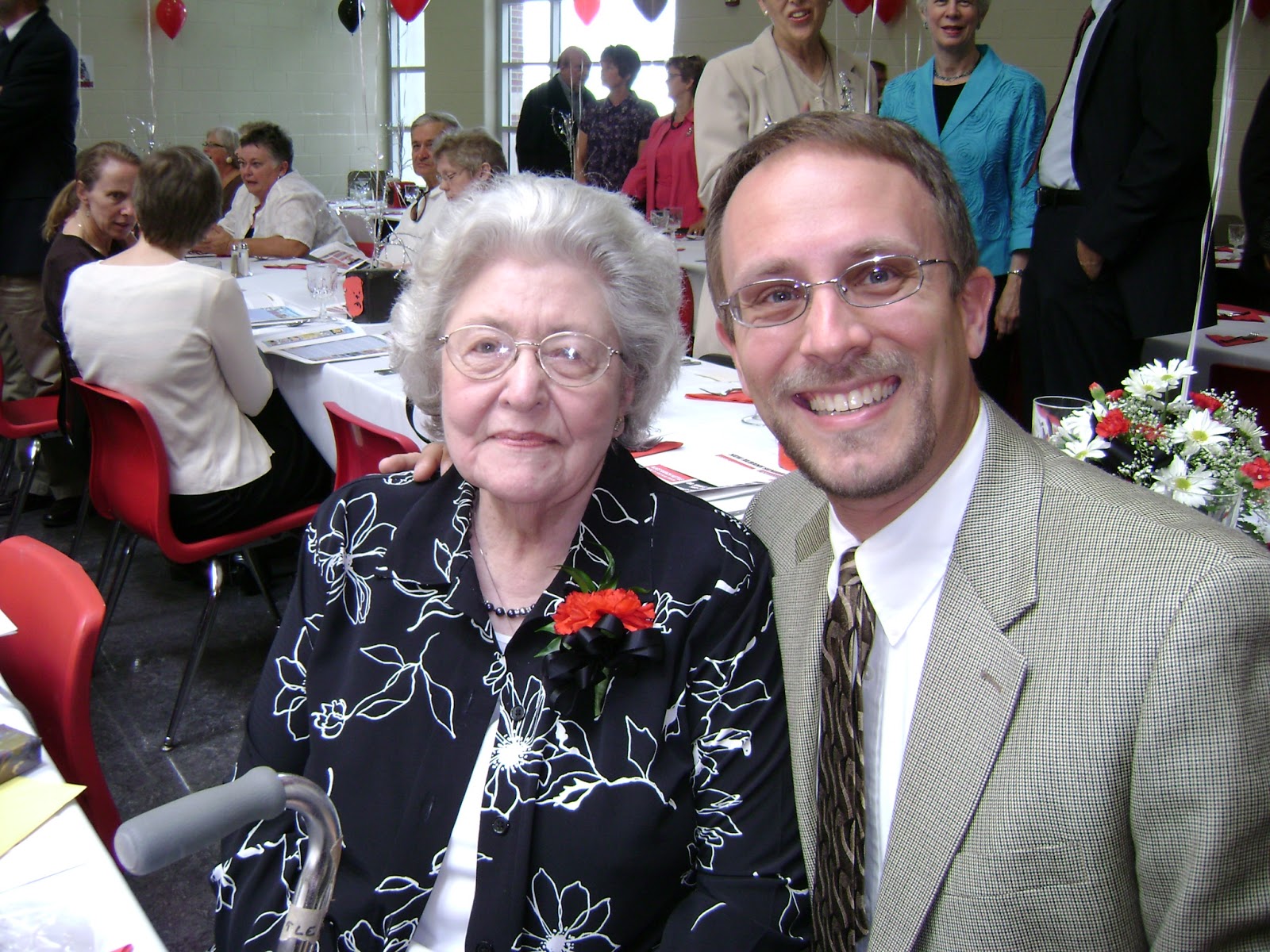
July 30, 2020.  Today my dad would have turned ninety, and I am starting my thirtieth year in education.  Neither of those facts seems possible, which is a common experience as people age.  We ask where the time went and how it could have gone so quickly.  Where and how, indeed.

I wrote several years ago about the teaching heritage in my family, most of which lies on my mother's side.  My dad, too, was an educator, and you can read about his career in that earlier post and in this one in which I described five key "ways of an educator" that I took from him.  What strikes me today is how similar things are in my experience compared with that of my dad.

My dad was born in 1930.  To say that things are different now is so obvious as to be absurd.  He did lead the way in bringing computers to his elementary school in the late '70s and early '80s, but he could not have imagined setting up courses in a learning management system so students can access learning materials at any time and at any place in the world.  He certainly could not have dreamed of technology that allows me to look at my computer and see my students in their homes while they are seeing me through their own devices as we engage in discussions together from different locations.  Oh, he might have been able to dream of it.  He was a fan of the original Star Trek series, after all, but he would never have considered such things to be more than fantasy.

Yet, I would argue that things are much the same for me as they were for my dad.  As I have prepared to enter my thirtieth year of teaching Latin, despite feeling as if I were a beginning teacher as I have had to grapple with new technology and more questions than answers, I have done so with my eyes fixed on something beyond the immediate.  My students, all born in the 21st century, are still people, and they will come to me as they always have, as they came to my dad and mom when they taught, as indeed they have come to teachers stretching back to Socrates, with their own thoughts and ideas and questions.  They will come with curiosity, and I am so eager to share with them treasures of knowledge I long ago discovered and to find new gems along with them.

You see, my dad and I both shared an inclination toward huge smiles and laughter that could be heard several rooms away, and I am sure that the source of such constant joy and joviality was for him as it is for me, life itself, and education is about life.  It is about sharing and exploring all that has gone before us in the many fields of knowledge.  It is about thinking and creating based on that shared exploration to add to the body of human experience.  Human beings have an innate drive toward life, and to be part of that, to sail its strong and mighty currents, cannot help but bring a smile to the face of anyone who does so in the vast, wonderful sea of learning.  It brought endless smiles to my dad, and it still brings a smile to me.


Friday, May 22, 2020

Students, Philosophy, and Quarantine

Lucius Annaeus Seneca, 4 B.C.-A.D. 65

My Latin V students read some of the philosophy of Seneca during the fall semester.  It wasn't my idea, but that was what they wanted to do, and when they had finished, they insisted that I include his writings in my curriculum.  According to them, Seneca wrote advice that was especially well suited to high school students, and so I got to work.  I read through all 124 letters, grounded in the thought of Stoic philosophy, that he had written his friend Lucilius.  From those I chose selections from twenty-two epistles for the students in my Latin III classes to read.  The goal was to discuss them together as we headed toward a special project at the end.

And then we moved to e-learning during the time of quarantine.  There was nothing we could do that would possibly replace the richness and depth of discussing this ancient philosopher in person, yet I was unwilling to scrap the idea since the Latin V students had been so passionate about our reading these letters.  I recorded videos that offered some background and discussion of each letter, and the students then translated the works and sent them to me along with their thoughts.  The special project, however, was something we kept.  After having read these letters that Seneca had written his friend, letters filled with sound advice and wisdom, the students were tasked with writing an epistle to one of their own friends in which they shared the wisdom from one of Seneca's letters and explained why it had particular value for them.

The letters they wrote proved that even during e-learning, they had grasped the essence of what Seneca had written even as the depth of their letters made me wish ever more that we had been able to discuss these works in person.  One, however, stood out.  The young man who wrote it based his letter on Epistle XXVIII by Seneca in which the philosopher wrote, "You ought to change your spirit, not your climate.  To a certain person complaining about this same thing, Socrates said, 'Why do you wonder that your travels do you no good since you carry yourself around with you?  The same concern presses down on you that drove you forth.'  Do you seek to know why escape does not help you?  You escape with yourself.  It matters more who you are than where you are going."  As you will see, this student reached back nearly two thousand years to find wisdom that he could apply in the 21st century and during a time of pandemic-induced quarantine.  This, my friends, is what learning looks like.


Dear _____,
I have been thinking over our present situation, being stuck at home, and I have realized something that I thought I should share with you. When we are at school, we were always worried about upcoming tests and homework we were assigned. We tried to juggle our athletic, social, and academic lives. Now that we are learning from home, one would think that those worries would be gone. But I have realized that for many, these same worries persist. We have grown so used to having these concerns in school that we cannot let them go at home. I think of a letter by Roman philosopher Seneca, his epistle XXVIII. In it, he claims that we cannot change our spirit by simply moving location. This really resonated with me because I have thought similar things about learning from home. Even though our location has changed, many of our same worries and problems persist because we cannot let them go. We thought that at home learning would be easy because it let us do our own work on our own schedule. But in reality, the change in location is not enough. We must examine ourselves in this time of isolation, and many do not have the desire to self-reflect. Instead, we claim that the superficial change in surroundings has changed us, and that in quarantine we are less stressed. But for many, this is not true. We procrastinate and we put less effort into our work. We end up with a similar level of stress as we had in school. We rely on our surroundings to change us, Khaya, instead of ourselves. When we were first told that we would be spending all our time at home, many people claimed that this would give them time to finish all the things they were doing and let them accomplish things that they had always wanted to do. But for almost everyone, this turned out to be false. By relying on our environment to change us, we squandered the opportunity to do these things. We need to change our mindset. We must realize that we are the same person we have always been and that if we want to become more productive or less stressed or change anything about our lives, we must first change our mindsets and our attitudes. Only then will we be able to accomplish our goals.


Wednesday, May 13, 2020

A Teacher's Teacher

Psalm 90 says that our lifespan is threescore years and ten, and if that should be true for me, then I am well beyond the midpoint at which Dante began his famous journey.  Yet even at my age and with my decades of experience in education, I still need a teacher.  I have been blessed since Kindergarten with outstanding teachers, but over the past twenty years there has been one who has gently and carefully guided and shaped my thinking in ways that even he may not know.  Do not bother skipping to the end of this piece in search of his name, for you will not find it.  I doubt he would want the publicity, but I do want to share his latest lesson.

Mine is a logical mind that takes great pleasure in wit and good turns of a phrase, and this combination can lead to the sharp skewering and harsh condemnation of things that are wrong.  To be sure, there are wrongs that need to be skewered and condemned, but there is such a thing as grace, and my friend reminded me of that when we talked today about the expectations we all have of each other during this unprecedented time.  No one has experienced what we are living through in these days of COVID-19.  No teacher has ever taught in circumstances like these.  No custodian, principal, or superintendent has worked in such conditions.  In fact, there is not a banker, barber, mechanic, librarian, elected official, lawyer, doctor, firefighter, police officer, pastor, rabbi, plumber, architect, IT specialist, mother, father, or child who has ever experienced a pandemic and its consequences such as we all are experiencing right now.  What does that mean?

It means that the best leader before this moment and the worst leader before this moment are now trying to lead in a unique moment.  Yes, some will be better prepared for it, and when we say that we are all doing our best, the best by some will serve better than the best by others, but it is perhaps unfair to judge too harshly those whose best is not all we would want it to be.  I have certainly dropped a few balls and thought of some wonderful ideas after the time had passed when they would have been useful. 

We should have high standards, both for ourselves and for those we lead.  Parents rightly maintain high expectations for their children, just as bosses do for their employees and employees do for their bosses, but it is not helpful for the backseat driver to scream at the one behind the wheel who is driving the car across unfamiliar terrain.  If the vehicle is about to go over a cliff, then by all means, yell with the full capacity of your lungs, but if it is merely a bumpy ride, it may be better to sit back and hold on tightly.

Monday, May 4, 2020

What Is Quarantined Education Teaching Us, Part 2


Some students find themselves more productive during e-learning, and some find themselves less so according to this decidedly unscientific study that I discussed in an earlier post.  I have questions about the usefulness of data-driven studies in a field like education, but that is a topic for a different article.  My uncertainty regarding such methods does not, however, prevent me from offering an equation and a discussion of it.  A lower student-teacher ratio plus less time spent in class plus more independent learning can equal true education.

I've lost you already, haven't I?  If I didn't lose you at "lower student-teacher ratio," then I surely did at "less time in class."  We all know that the best learning environment is one with the lowest possible student-teacher ratio, right?  Countless articles like this say so.  Then again, countless articles like this one say the opposite.  Of course, we can all agree that students need more time in class.  There are, after all, countless articles such as this, that support the notion.  Yet there are countless articles like this one suggesting the opposite is true.  The seemingly infinite number of articles on both sides of these two points is one of the reasons I question the usefulness of certain kinds of research in education, but as I said, that is for another time.  For now, I want to discuss the components of my equation and one all-important word.

Students want to ask questions, but they don't want to feel foolish doing so, and we will never create a classroom environment in which all students can achieve this.  No matter what or how many procedures we establish, students are people, and people care what others think about them, and if knowing something is valuable, as it must be since we award those who know things on tests and assessments, then not knowing something must be of less value, and what demonstrates not knowing something quite like asking a question?  We can pontificate all day long about the value of asking questions and the importance of failure as a part of growth, but deep down, at a gut level, none of that matters for most students under age eighteen, and perhaps for a large number above that.

I am the first to write glowing paeans of praise about students who ask penetrating questions in class, but I also know that there are students who will ask their questions only when in a small, after school environment, or one-on-one with the teacher between classes, or from a certain distance through email, or via the combination of comfort and distance afforded by something like Zoom.  And I also know that it is too easy for students to indicate understanding in a larger class when that simply isn't the case.  Perhaps they do so because they do not want to seem foolish or do not wish to be the one who drags class out by asking something, and because of this, it is too easy for teachers to assume understanding and to move on.  In short, then, a smaller student-teacher ratio is better for some, perhaps even many, students.

The same is true for spending less time in class.  We can certainly line up the studies and provide our own experiential evidence to support the claim that more time in class is required for success, and indeed this may be the case for some.  For others, however, it can be not only a waste of time, but an experience that dims and dulls their creativity.  Before the days of increasingly locked-step conformity demanded by standardized tests and their curricula, teachers could allow students to work at their own pace.  If some finished early, they could work on other matters, whether for that class or another, as the teacher spent more direct time with those who needed it.  Undoubtedly this is still the case in some, hopefully many, classrooms, but this sort of half-guided, half-independent learning is increasingly vanishing from our landscape, in part because of the aforementioned standardization of so much of education, but also because of teacher evaluation tools that require everyone in the room to be actively engaged in one particular activity all of the time.  Students quietly reading for another class are seen as being off task, and this results in a tick in the wrong box for the teacher.

In any given class, there are students who simply need less direct instruction and less practice with the material to achieve mastery.  If there is one thing that quarantined education is teaching us, it is that students are quite capable of achieving what is required and then doing something else. For them the result is a much healthier study-life balance, one in which learning and living are not so artificially separated.

This leads to the third element on the left side of my equation, independent learning.  There will always be students who go through the motions of learning, just as there will always be adults who merely go through the motions of life.  Yet when given the freedom that less time in class brings, many will discover or rediscover their natural curiosity and love of learning.  And while that may not hold true in every class, it will hold true in some.  I have talked with fellow educators and can bear witness myself that there are students who, during this time of quarantined education, are asking the truly curious questions and exploring ideas of their own inspiration that they simply would not have if they had progressed like a can of soup down the assembly line of their traditional day.

All of this, I contend, can lead to true education, one in which students and teachers embark on a shared journey of discovery that is sustainable, every widening, and of more value than one that produces fact-recalling automata that are less efficient than a basic search engine.  Yet the most important word in my equation is "can," which is related to words like "may," "perhaps," and "many" that I have used throughout this piece.  These are words that suggest vagueness, and we don't like that very much, for ours is a data-driven society that worships at the altar of the hard sciences.  Human beings, of course, are known for their refusal and even inability to fit into narrow categories.  Will all of the things I have suggested work for everyone?  They will not, just as no other curriculum or program or educational theory will do.  They are simply ideas to work into the mix, to make available as we seek to provide the widest variety of opportunities for human beings in their education.  That there is a wider variety than we have imagined may just be the greatest lesson that quarantined education has taught us.


Wednesday, April 29, 2020

What Is Quarantined Education Teaching Us? Part 1


After two of my students emailed me to say that they were being more productive during their time of e-learning, I became curious.  These were not the highest performing students in class, and their comments came unsolicited.  One even admitted that he tended to distract other people and that other people distracted him at school, hence the greater productivity at home.  My curiosity led me to ask my AP students during one of our Zoom sessions, and they had a variety of thoughts on what was working well, what was not, and why.  It was time, I decided, to dig a little deeper.

For one week my students had access to a survey in which they responded to a range of questions about e-learning and in-person instruction.  Then came the fun part of thinking through their responses, both on my own and with colleagues.  What follows are the questions I asked and some initial thoughts and conclusions.  There will undoubtedly be more as I continue to discuss this with other educators.

Survey Questions


1.  Which grade are you currently in?

2.  Which class is working best for you during e-learning days?
  • Math
  • English
  • World Language
  • Humanities
  • Science
  • Performing Arts
  • Art
  • Other (please specify)
3.  What is working well in this particular class?

4.  Which class is working least well during e-learning?
  • Math
  • English
  • World Language
  • Humanities
  • Science
  • Performing Arts
  • Art
  • Other (please specify)
5.  What is not working well in this class?

6.  If there is a class that is working better for you as an e-learning class than an in-person class, which class is that and why?

7.  If there is a class that works better for you as an in-person class than an e-learning class, which class is that and why?

8.  Do you find yourself more or less productive during e-learning than in traditional, in-person learning?  Why do you think that is?

9.  Please share any other comments about e-learning that you think would be helpful to teachers and administrators.


Although I had been prompted to study the e-learning experiences of my students by two emails that spoke of greater productivity at home, their experience was not indicative of the whole.  Of those who felt strongly one way or the other, 73% said they were less productive at home, whereas 35% said they were more productive.

We must be careful about attempting to draw too firm a conclusion about anything from an unscientific survey such as this, but its results can direct us to further questions and reasonable speculation by those with long experience and a background of deep study in education.  One such person is my wife, Melissa Perkins, who holds both bachelor's and master's degrees in education and has spent thirty years as a teacher and administrator in K-12 public and private schools.  She observed that those who felt less productive during e-learning at home had not been sufficiently prepared for that level of independent learning.  This, she suggested, stemmed from an increasingly scripted and routinized learning experience in our schools, and I agreed.

And why should that not be the case?  With the increased emphasis on testing in all forms and for all reasons, testing that includes A.P. tests, I.B. tests, end-of-course assessments, state-mandated exams, and more, and with the close linking of student performance on exams with teacher pay, it is unlikely and unreasonable to expect that adults will entrust their livelihood and that of their families to the vagaries of independent learning.  The outline and the study packet become unquestioned necessities.  Many colleagues and I have remarked on the anxiety-filled question we receive more and more at the end of a semester, "When will we get our study guide?"

We have an unprecedented opportunity to study the nature of education and how and why we do it.  We also have a chance to explore new ways of leading students on that shared journey of discovery.  Already ideas are beginning to surface, and I will explore some of those in the next part of this series.

Wednesday, April 22, 2020

Love In The Time of Pandemic

One of my own high school teachers once said, "It is our responsibility as educators to provide a sound education based on ethical principles.  Innate within every human being is first the desire to be noticed and to be loved, then comes the need to be taught to learn how to learn.  It is the role of the teacher to notice and yes, to love the student so much that he is ready to learn, and in turn develop all of his potential."  I have always been aware of the necessary, as in logically prerequisite, quality of love for true education to take place, but perhaps never so keenly as when I recently filmed my empty classroom.


As I say in the video, I could see the faces of my students, remembering where each one sat, and I missed them.  I missed them because of their jokes and their laughter each day.  I missed them because of the deep insights and questions they brought to our studies.  I missed them, in short, because I love them.

In Latin I we explore what can be learned about a culture by looking at its language.  Latin has many synonyms for the verb "to kill," which was perhaps appropriate for a people who conquered much of the known world.  English contains many, often colorful, ways to say that someone is inebriated, but when it comes to love, we are lexically impoverished.  I use the same, one-syllable, four-letter word to describe how I feel about God, my wife and children, a classic rock album, and Krispy Kreme doughnuts when they have just come off the line.  No word should be forced to do that much work.  Greek is a help to us here with its multiple words that can be translated "love," and three of them capture the love of this teacher for his students.

First, there is storge, which is the love between parents and children, and this seems only right, for according to law, teachers act in loco parentis, which is Latin for "in the place of a parent."  This is the love that allows me to be amused by quirky personalities and to see the gifts and potential in my students that they may not yet see in themselves.  It is the love that makes me genuinely excited when my students get the job or scholarship for which they had applied and that makes me always eager to receive messages from them after graduation in which they tell me of all they are achieving.

Next is philos.  This word can also mean "friend" and captures the idea of one who is beloved and cherished.  This is the love that causes me to spring into action when a student is in need, and in this regard is certainly related to storge.  If a student lacks the money for lunch or another activity, I want to assure her that all well be well.  When a student is in any way harassed, whether by peers or other teachers, my first move is to protection and then to resolution.  Yet it is also the love that fuels the impossibly deep and rich conversations that take place during passing periods or conference periods or support hours after school, conversations that seem to be less between teacher and student and more between friends seeking truth together.

Finally there is agape, which was once translated "charity" before that English word took on too limited a meaning.  This is sacrificial love.  It is the love that prompts me to pull out my best, even in this time of distance learning, so that students will have the closest thing possible to the rich and full exploration they would otherwise have with the history and wisdom and poetry of the Latin literature they read.  I don't want to slap together simple activities just to fill their time, but I also do not want to burden them beyond the scope of what e-learning makes reasonable, and so I must carefully plan and craft what we will do.  It takes time thinking through and recording the many videos that accompany their readings and language practice, and I do so because I want them to get the most out of their studies.

John Cougar Mellencamp once sang of "a million young poets, just screamin' out their words to a world full of people, just livin' to be heard."  More than that are sharing their thoughts and feelings about our current days, but as a teacher, I had to take a moment to say something about love in the time of pandemic.


Friday, January 10, 2020

Prepared For Adventure

Aeneas Fleeing From Troy, Pompeo Batoni, 18th century

Undique convenere, animis opibusque parati,
In quascumque velim pelago deducere terras.  Aeneid II.799-800

These lines from the second book of Vergil's Aeneid describe the refugees fleeing from Troy to Aeneas with the hope that he could lead them to safety and a new land.  The lines are literally translated as "They assembled from all quarters, prepared in mind and in resources, for whatever lands I would wish to lead them on the sea."  This is the perfect description of the ideal classroom.

Make no mistake, a teacher is a leader.  The Greek word from which we derive "pedagogy" is paidagogos, which is a leader of children, and whether you understand education as a leading from the darkness of ignorance or a leading into the light of knowledge, it is an enterprise that requires leadership, and it is the teacher who serves that chief function.

Yet notice in these lines from the Aeneid that the people have come to Aeneas animis opibusque parati, prepared in mind and in resources for whatever lay ahead.  We often focus on the student preparation of bringing materials to class, notebooks and writing instruments and such, but too rarely do we even consider the preparation they need in their minds and spirits.  

I have written before about the quality of being docile, which is far more than merely being quiet and demure, but is the disposition of mind and spirit that makes it possible to learn.  How, then, do we help our children develop that essential disposition so that when they enter the classroom, they are actually prepared for the adventure of education?

First, they must eat well and sleep well.  A body that is malnourished or deprived of sleep will not be able to sustain the rigors of the educational journey, and if there is one of these two essentials that we tend to neglect, it is sleep.  Young people must get uninterrupted rest, which means no phone or computer activity once the lights have gone out.

Young people, and indeed all of us, are imitative creatures.  If the adults in their lives are curious, they will learn to be curious, too.  Share with the young people in your life the questions that you ask about the world around you.  Invite them into your speculations and discussions.  Soon, they will be asking questions of their own, perhaps questions you have never considered.

Read.  Read to children when they are young.  Read with them as they grow older.  Share with them the books you are currently reading.  Express to them your excitement over an article you have read or a book you hope to get.  They will value what those around them value, and if it is nothing more than a steady diet of electronic entertainment, we should not expect them to become the deep, reflective people they have the ability to be.

When children come to class prepared in both mind and resources, there is no telling to what lands they can travel and what they will discover along the way.


Thursday, January 2, 2020

A Valediction


I recently came across some items from high school, including pictures...yikes!...and found my high school commencement program, which included my valedictory address.  Although I had always remembered the lines from Pope with which I had begun, I did not remember my own words.  Reading them now, with nearly three decades of teaching experience, I saw several things that struck me in that youthful speech, which ran as follows.

"So pleas'd at first the tow'ring Alps we try,
Mount o'er the vales, and seem to tread the sky.
Th' eternal snows appear already past,
And the first clouds and mountains seem the last:
But, those attain'd, we tremble to survey
The growing labours of the lengthen'd way,
Th' increasing prospect tires our wand'ring eyes.
Hills peep o'er hills, and Alps on Alps arise!"

     These words, which were written in 1711 by Alexander Pope in his Essay on Criticism, have a special meaning for us tonight.   When we began our educational careers twelve years ago, the world was new to us, and we were eager to learn about it.  We came across both sad and joyous occasions.  As our bodies grew and horizons expanded, we looked to our high school graduation as the culmination of our work and determination.  This was to be the top of the mountain we had been climbing for twelve years.
     Now that we have reached the top of our mountain, we look out and see that there are more hills to climb.  We have not so much ended a journey as we have embarked on a new one.
     We have learned many lessons throughout the years.  Many have been taught to us in classrooms, while others have been taught to us by living life.  Let us take these lessons--the ones that have brought us here tonight--wherever we go and apply them as we make and attain our goals.
     Let us also remember and thank those who have taught, guided, and befriended us along the way:  God, family, teachers, and friends.  Without them, our journey here would have been impossible.
     May God bless us in all that we do.

As I looked back at my own words, I could not help analyzing them for style.  I'm a Latin teacher...what else would you expect?  The first thing that struck me was my penchant for pairs.  "The world was new..., and we were eager...."  "...both sad and joyous...."  "As our bodies grew and horizons expanded...."  Absent was what has become my fondness for threes, apposition, and asyndeton.  Yet two aspects of that youthful speech have remained in much of my writing and speaking throughout the years, the grounding my thoughts in the writings of others and a deep sense of connection with people.

My senior English teacher, Mr. John Richardson, introduced me to British poetry, which, especially the works of Alexander Pope, captivated my heart and mind.  Pope's words in his Essay on Criticism were particularly appropriate for graduating seniors, and my use of them reveals my core philosophy of education.  Education is, at its most fundamental level, understanding that this is that.  It is, in essence, the making of a connection, and applied education is making use of that connection.  Pope poetically expressed an idea, and my 18-year-old self said, "This is that.  What we graduates are experiencing is what he has described."  I then made use of that connection as the basis for my valedictory remarks.

For me, however, it goes even deeper than that.  It is not enough that I alone make a connection or even that I use that connection in further work.  I am keenly aware of the connections among people, and this produces two effects.  The first is gratitude.  I genuinely love giving credit where credit is due.  The second is my passion to connect people, both with each other and with connections of understanding that I have discovered, and this forms the essence of what I do as a teacher.  Nothing thrills me more than to connect students with authors and ideas, with programs of study and scholars in the field, with universities and career paths.  Side note...did you see what I did with the grouping of three and asyndeton in that last sentence?  But I digress.

In that teenage speech lie the seeds of what I do and how I do it, but there is something more.  It was my first significant speech in front of large audience.  Our graduating class was listed at 455, and with guests at commencement it would be safe to assume the audience numbered around 1500.  I was a shy young man, and the thought of delivering a memorized speech in front of such a crowd was daunting, so I memorized a couple of other passages from which I drew strength as I practiced my speech at home.  "I can do all things through Christ who strengthens me," Philippians 4:13, "and the peace of God that passes all understanding will guard your hearts and minds in Christ Jesus," Philippians 4:7.  And He is still guarding my heart and mind, giving me peace, and strengthening me as I continue to climb the hills and Alps of the lengthened way.

Ok...here is one of those old pics from high school. Here I am with my grandma at her house.


Sunday, November 10, 2019

Vivit Lingua Latina

Miss Ranck at the time she was my teacher

I don't know whether this person looks frightening to you, but she made me so nervous I nearly quit Latin.  Since I met my wife in a collegiate Latin class and have taught the language for nearly three decades, I am glad I did not, but I was certainly tempted after the first day in Miss Alice Ranck's Latin II class at New Albany High School.

When I was a freshman, which in our school district meant the last grade of junior high, I signed up to take German for the highly academic reason that this was the language my friends were taking.  Because the class was filled, the assistant principal called my parents and said he wanted to enroll me in Latin, for, in his words, he wanted me "to experience Alice Ranck."  It would mean walking across the athletic fields to the high school each day, since Latin was not offered at Hazelwood Junior High, but he assured us the effort would be worth it.

As it turned out, my Latin I teacher was Joyce Woller, a very nice lady, and I enjoyed the language enough to continue it the following year as a sophomore at the high school.  Nothing could have prepared me for that first day.  Oh, Miss Woller had done a fine job of grounding us in the basics of Latin grammar, but what neither she nor anyone else could have prepared us to handle was the force of nature that was Miss Ranck.  She talked so fast!  It was like taking a sip from a fire hose!  I thought I would never be able to keep up, and when I told my parents, they asked if I thought I should drop the class.  I decided to stay with it, and my life has never been the same.

Miss Ranck had a white bumpersticker on her chalkboard from the American Classical League that read in purple letters, Vivit Lingua Latina, and indeed the Latin language continued to live through her instruction.  There was, of course, the grammatical instruction, which, after decades of my own teaching, I can assure you was as sound as could be.  Much of my own instruction, from style to curriculum arrangement, stems from her.  There was also the historical and the mythological material, and again I find phrases about Caesar and Cicero echoing from her classroom in my own.

Then there was the fun.  We had an annual Roman banquet, complete with Roman dress and high school students reclining on their elbows in the school gym to eat Roman food.  There was Latin Club, with its "pound party" fundraisers in which students brought in a pound of food for auction.  And there was certamen.  This is an academic competition that sees students playing in teams to answer questions about the language, history, and culture of Greco-Roman antiquity.  Miss Ranck took us to play certamen (pronounced care-TAH-mun) in far off Muncie and Terre Haute, and my mom often drove, following her little, blue Volkswagen Rabbit in the wee, dark hours of a Hoosier Saturday morning.

To be fair, this is all a nice description of a good teacher, perhaps even one above average, but it does not explain why this woman from Fountain City, Indiana, should have become a legend.  It does not give a hint why she was named 1982-1983 Secondary Teacher of the Year by the Classical Association of the Middle West and South.  It does not explain why she was the 1985 Teacher of the Year for the New Albany-Floyd County Community School Corporation and a candidate for Indiana Teacher of the Year.  It does not give even the slightest clue why hundreds of her former students have joined a Facebook group in her honor, have traveled over the years to visit her, and have shared with her weddings, births, and graduations that they have celebrated.  Perhaps those students took to heart the wisdom of Miss Ranck's favorite Roman author Cicero, who in his essay on friendship, wrote, "Qui esset tantus fructus in prosperis rebus, nisi haberes qui illis aeque ac tu ipse gauderet?" (De Amicitia, 22)  "How great would be the enjoyment in good times if you did not have someone who would rejoice in them as much as you?"


Miss Ranck at her induction into the New Albany High School Hall of Fame

Here at last we come to the heart of what made Miss Ranck a beloved figure in the lives of her students.  It is simply that, heart.  When she was inducted into the New Albany High School Hall of Fame in 2008, she said in her acceptance remarks, "It is our responsibility as educators to provide a sound education based on ethical principles.  Innate within every human being is first the desire to be noticed and to be loved, then comes the need to be taught to learn how to learn.  It is the role of the teacher to notice and yes, to love the student so much that he is ready to learn, and in turn develop all of his potential.  What better way for a teen-ager to learn to live honorably and well than to read from the literary masterpieces of Cicero."

Miss Ranck noticed her students.  Whether they were in her Latin class or not, all the children at New Albany High School were her students, and she greeted them warmly each day.  Those who had the good fortune to be her students were blessed by her demanding love, a love that would not tolerate anything less than a student's best.  And when in the course of human nature a student came ill prepared to class, that student heard the familiar refrain, "Preparation will cure what ails you!"

She inspired at least three of her students to become Latin teachers, and all of us have had long careers.  Drawing from my own experience, let's do a little math.  From middle school to high school to undergraduate levels of Latin and Classics, I estimate that I have taught around three thousand students.  During that time I have supervised eleven student teachers, nine of whom went on to teach Latin.  Now consider that Miss Ranck's other two students who became Latin teachers had similar careers.  Do you see where this is going?  Add on others of her students who entered the teaching field, albeit not in Latin, and took her wisdom and caring to their students.  Add to that the rest of her students whose lives were enriched by their time with her and who were better employees, neighbors, husbands, wives, and parents because they entered the grand conversation with the greatest ancient authors, a conversation hosted by one who modeled what she taught.  Ask them.  They will tell you that this encomium is based in fact, not hyperbole, and you will come to see what truly makes a legend.


Miss Ranck's students who became Latin teachers
(L to R:  Steve Perkins, Alice Ranck Hettle, Steve Prince, Tim Harbison)

One of the happiest days of my high school life was Tuesday, April 29th, 1986.  Miss Ranck had loaned me one of her copies of New Latin Grammar by Charles Bennett, and in it I discovered something about the imperative plural of deponent verbs, those tricky words that have only passive forms and only active meanings.  I shared it with her, and she did something that made my day.  She gave me that copy of Bennett's Grammar and inscribed in the front a message that ended, "May the best of everything be yours in the future, Steve!  You've already earned it."  I can still remember walking to my next class without my feet touching the ground.


Miss Ranck more than earned the respect of the students, parents, and colleagues with whom she worked.  The Romans believed that a person's fama, that which was said about someone, was the most important thing, for it would live even after that person had passed from this life to the next.  If fama has that sort of lasting power, then Miss Ranck's must surely shine beyond that of most.  In fact, as Vergil wrote of Jupiter's intention for the Roman people in Aeneid 1, so it is with the fama, the legend, of Miss Ranck, or as many of her students called her, Miss Alice, even after she retired to marry her high school sweetheart and became Mrs. Alice Hettle.  It has nec metas, nec tempora, neither limits nor duration, and through the lives of her many students will stand sine fine, without limit.  Because this is true, we can all borrow words from Catullus in poem 101, "atque in perpetuum, Magistra, ave atque vale."  "And into eternity, O Teacher, hail and farewell."


Wednesday, November 6, 2019

Vague, Sham, Redundant


Irvin Goldstein

Yesterday my sixth grade teacher Irvin Goldstein passed from this life to the next, and today Facebook has been filled with fond remembrances from former students.  He was one of the most influential teachers in my education, so it is natural to consider what words come to mind when thinking of him.  Several do, actually, and in this order.

Vague
Sham
Redundant
Verbose
Articulate
Gregarious
Mediocre
Magnificent
Loquacious

Although "articulate" and "magnificent" may have described him, the others do not, so you may ask why they come to my mind.  Each week Mr. Goldstein put a new word on the chalkboard in addition to our regular spelling list.  For extra credit, we could list each word and its predecessors  on that week's test.  The first week the word was "vague," the second week "sham," and so forth, and I have remembered the first nine in order for nearly forty years.

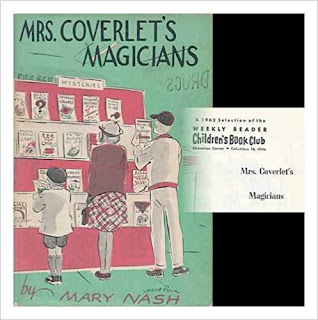
It is not so much that I have a prodigious memory as much as the fact that nearly everything Mr. Goldstein did with his students was memorable.  He read to us each day after lunch, and I still recall the excitement of Black and Blue Magic and Mrs. Coverlet's Magicians and Escape From Warsaw, which whisked me away to another place that stayed with me so keenly that I checked it out of our local library and read it to my son when he was young.


And then there were the pickles.  Yes, we made pickles.  And root beer.  In Mr. Goldstein's room, science took on a practical flair, which made sense, given his passion for helping his students engage with the world around them.  For example, he took the entire class to his farm for a field trip and designed a camping program for fifth and sixth graders that lasted for years in our district.  I remember lying out under the stars one evening at Otter Creek Camp, and Mr. Goldstein walked by.  He saw my friend Phil and me gazing at the stars, and he said with a gentle laugh, "They almost seem to move, don't they?"

The two things that had the most significant effect on my education and general life, however, were his instruction in creative writing and his preparation for later stages of learning.  He regularly gave us writing prompts, and that was where I came alive.  I could not wait for the next writing assignment and began to fill notebooks outside class with my own stories.  It was in Mr. Goldstein's room that the writer in me was born.

As for sending us on to junior high and high school, no one could have prepared us better.  He treated us as young adults and held us to the highest standards.  He equipped us to take notes and organize our time and materials so that the transition to seventh grade and beyond was a smooth one.

My memories of Mr. Goldstein are vivid and far from vague, for when it came to teaching he was no sham, but the real deal.  I could go on and on, but at some point my stories would become redundant and my writing would become verbose instead of concise as Mr. Goldstein taught.  I hope that this meager eulogy has been articulate enough, however, to give some insight into a teacher who, while not particularly gregarious, was beloved by all, for never would he accept the mediocre or anything less than the best from his students.  He made us great, and in so doing was the living definition of magnificent.  Since experiencing sixth grade with Mr. Goldstein would make even the most taciturn loquacious in recalling precious memories, I will end with a simple shalom to one who will always be one of my best teachers.


Update:  One of my classmates shared this picture from our sixth grade class with Mr. Goldstein.


Mr. Goldstein is center left at the top next to our principal, Mr. Gene Miller.  Yours truly is the young man in the upper right corner.